


Showing posts with label chicken. Show all posts


Not only are chickens extremely easy to raise, but they are also very productive. Chickens provide you with meat to eat, eggs for breakfast, and you can breed them for a profit. However, for first-timers, it is important to be aware of the mistakes you should avoid.

1. Failing To Predator Proof Your Coop

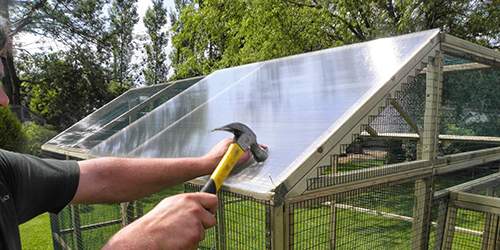
Predator attacks are awful, especially when you can’t avoid them. A lot of newbie chicken raisers fail to put the necessary precautions in place and can lose an entire flock overnight with one attack. The best way to protect your chickens is to predator-proof your coop. Here are some tips:

Don’t use chicken wire because it doesn’t keep out small predators like weasels. Hardware cloth is the most effective way to predator-proof your coop.

Do your best to close all small gaps because rats and weasels are known to squeeze through holes the size of an adult thumb.

At night close all doors and windows and latch them.

Cover the roof on the chicken run.

Place hardware cloth on the bottom of the chicken run if you have dirt floors to prevent digging predators from coming in.

Get a well-trained dog, it will scare any predators, and provide your chickens with around-the-clock protection.

Your presence in the yard during the free-range time will scare off any predators. But it is not advised to stand outside for long periods of time during the winter months.
2. Night Time Chicken Count


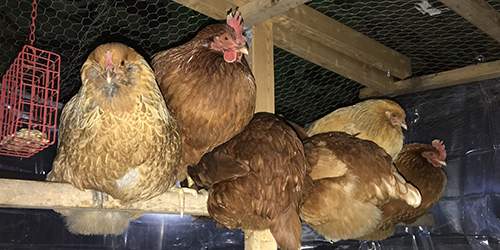
Free-ranging is a great way to raise chickens, but it is also the easiest way to lose them because it gives predators easy access. Count your flock before putting them to bed, if there are any missing, you can search for them before it gets dark.
3. Chicken Coop Heat Lamp

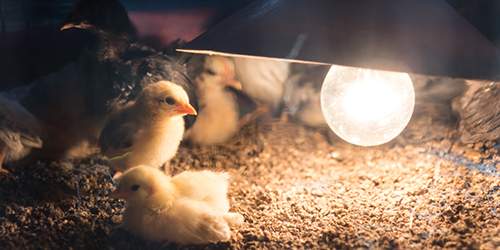
In theory, a heat lamp makes sense, but in practice, they are dangerous. Many coop fires have started because of heat lamps killing flocks and destroying property. They are not easy to secure, and there is a risk that they will fall onto dry bedding especially when there are active chickens in the coop. There is no need to heat a chicken coop because their bodies are biologically designed to protect them from the cold. However, if think your chickens need some extra heat, call a professional to do the job.

4. Feeding Chickens the Wrong Food

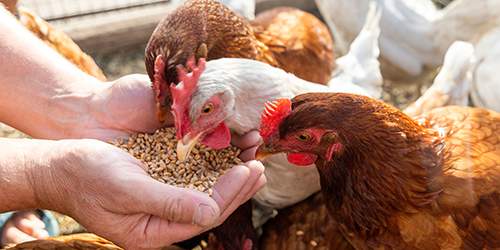
Chickens are omnivores, which means they like eating all types of foods including dairy, meat, fruit, and vegetables. Although chickens enjoy variety, there are some foods they should not eat, here are some of them:

  • Processed foods
  • Junk foods
  • Uncooked rice, pasta, beans
  • Fried foods
  • Onions
  • Citrus fruits
  • Leaves from rhubarb, potato plants, and tomato plants
  • Sweets, desserts, chocolate, candy

Hens love human food so much that they'll often come running when they see a person approaching with a bucket of scraps. Among their favorites are bakery items (even stale bread), rice, wilted salad greens, cooked vegetables, popcorn, beef or pork scraps, fish skin, fruit, cheese, yogurt, and cottage cheese


5. Using the Wrong Sized Coop

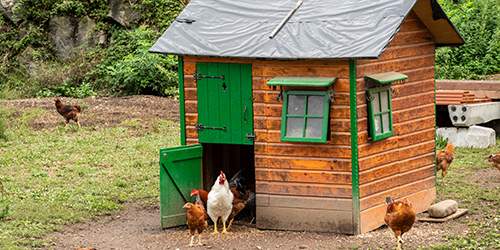
Small chicken coops don’t work well in a backyard. They are not sturdy enough, they don’t hold up well during bad weather, they probably won’t be big enough for your needs, and they give predators easy access. Even if you don’t plan on keeping a lot of chickens, too much space is better than not enough space.
6. The Wrong Temperature In The Chick Brooder

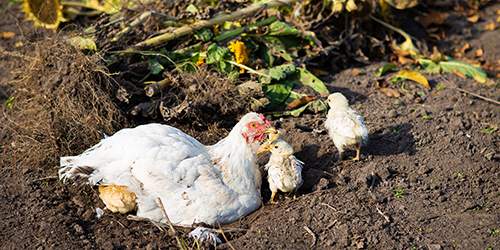
When first-time chicken rearers bring their basket of furry chicks home, they make the mistake of keeping the brooder too hot or too cold. The wrong temperature can be dangerous, and can cause permanent damage to your chickens; therefore, be sure to keep it at around 95 degrees F. Check the temperature often using an infrared thermometer, and adjust it if required.

7. Not Prepared For Extreme Weather

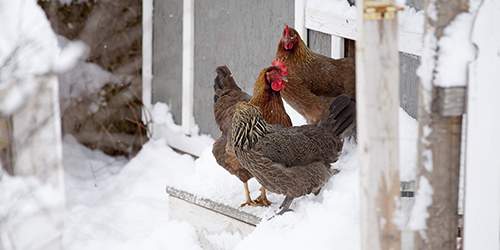
Chickens adapt quickly to weather changes, but extreme weather can be a problem. Since the weather can be unpredictable, it is advised that you are prepared for the summer and winter seasons. During the winter, protect your chickens from the cold, wind, and snow by insulating the coop with horse blankets, and adding extra bedding. When it’s really cold, feed your chickens hot oatmeal, and check for signs of frostbite and hypothermia.
During the summer months, makes sure you have plenty of fresh, cool water available. If there’s a heatwave, give the chickens a frozen treat such as fruits or vegetables. Allowing your chickens to free-range will give them the chance to get out of the sun because they will find the coolest part of the yard to perch in

8. Leaving the Garden Open

Chickens enjoy destroying gardens and as soon as they are given access, they will run riot and uproot all your hard work. The only way to prevent this is to protect your garden with a tall fence.

9. Not Using the Right Bedding
A lot of first-time chicken rearers assume any bedding will do for their little ones as long as it’s comfortable. But it’s important that you use the right bedding because anything else can damage your chickens. Don’t line the brooder box with newspaper for two reasons. First, it doesn’t absorb liquid, and second, but most important, it’s slippery. Without traction, chicken legs will splay which can cause spraddle legs. You should also avoid using cedar bedding because it is known to cause respiratory problems.

The best bedding to use for newborn chicks is paper towels; after a few weeks, start using pine shavings. They are easy to clean and very absorbent.

10. Don’t Leave Eggs To Accumulate

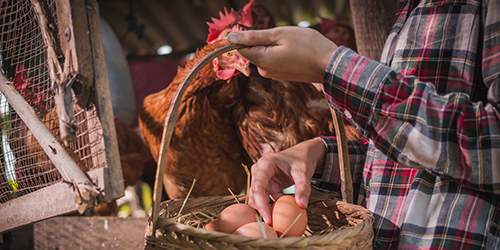
Collect fresh eggs from the nest boxes daily. In average weather conditions, twice a day is good enough. However, during the hottest months of the summer, and the coldest months of the winter, it’s important that eggs are not left outside all day, or eating them can become unsafe.

  • Collect eggs three times a day during the winter months. Throw away any eggs that are frozen or cracked.
  • Ideally, you should store fresh eggs at room temperature or keep them in the fridge. During the hottest summer months, the outdoor temperature far exceeds room temperature. To prevent any issues that can arise due to overheated eggs, collect fresh eggs three times a day.
Final Thoughts

It’s really exciting raising chickens. These birds will definitely keep you on your toes. As long as you are diligent in avoiding the above mistakes, you will have plenty of chickens to keep you company all year round.

 Subscribe in a reader


Thought I would throw it out there that I have a great affinity for the dual purpose chicken on a homestead. They serve the greatest potential while minimizing the overall workload of the homesteader. When seeking true self-sufficiency it is also best to have chickens who can replenish their own supply. Whether you want chickens for meat, eggs, or both, you have to get the chicks from somewhere.

Even flocks totally dedicated to egg-laying will require occasional replacement of the hens. The average lifespan of a chicken is about seven years, but many other factors can play into that, shortening the lifespan greatly (hawks, foxes, lose dogs, etc.). However, even if your chickens live their full lives, only part of that time is in production.

The first year of a hen’s life is spent growing, regardless of the breed or type of chicken she is. You will not see any eggs for at least six months, and closer to a year in most breeds. In the beginning, egg production is still low as well. It is a good idea to bring in new stock at least seven months before you need them so they have time to develop before you need their eggs.

A hen’s production level will also drop off after a few years. After the initial peak, it will begin to wane and eventually stop altogether. As a rule, chickens will lose most production value by the time they are six years old. They may still produce the occasional egg, but the geriatric chickens will have to be replaced if you wish to continue with your egg supply. That means that between older chickens going out of production and younger chickens needing to mature, you will need to bring in new stock every five years or so, if all of your chickens live to old age.

If you wish to produce meat for your freezer, you will need to buy new chicks every time, usually at least once a year. This creates a very heavy dependency on outside hatcheries. It isn’t a bad thing, necessarily, but does defeat some of the staunch homesteader’s desires to be self-sufficient.

The dual purpose chicken can do it ALL for you.

These breeds are well-known for their outstanding production of eggs and meaty bodies. While they do not produce either eggs or meat as heavily as breeds designed for those singular purposes, they do both with great style. The biggest benefit is that most of the dual breeds are excellent setters. They go “broody.” In chicken vernacular—broody is a GOOD thing.

Broody means they will sit on their eggs and then raise the resulting chicks to maturity. Those instincts are largely bred out of egg-layers who will “drop and run.” Larger meat breeds also have the desire bred out, but even when they would try and sit on the eggs, their greater weights make it a losing proposition: many eggs end up crushed beneath their large frames.

Some of the most popular and easy to find dual purpose breeds are:

Aracana: These chickens are colorful and have attractive feathering that stands out like a crown around their necks. They do well in all climates and are easy going, but slightly skittish. One of the most attractive features of this breed is the unusual egg coloring. They lay bluish/green eggs that are a real conversation starter, but the eggs taste the same as all other eggs and have the same nutritional value. The Aracana has excellent brooding qualities and will hatch out eggs whenever you allow her to.

Australorp: The Australorp is an attractive black bird. It is very friendly and becomes quite attached to its owners. They are quiet birds with very docile temperaments and have high egg-production qualities. They lay medium to large sized brown eggs. They are only average setters, but they will hatch out eggs occasionally.

Brahma: Brahmas are beautiful black-and-white birds that produce large, light brown eggs. They are very easy to handle and are friendly.

Buff Orpington: This breed is classified as a “heavy” breed. The hens, when mature, will weigh in at around 8 pounds. These birds are very tolerant of the cold and seldom have trouble laying during the short days of winter. They lay pinkish brown eggs.

The Buff Orpington is known for being one of the most broody of the chicken breeds. They are very nurturing to their young. They are also one of the most calm and friendly of the chicken breeds as well.

Crevecoeur: This is not as common a breed, but it bears mentioning because it produces lovely medium sized white eggs and is extremely unusual to look at. It has a long, spiked, hair-like comb on the top of its black feathered head and is quite distinctive to look at. It is a friendly chicken that is very docile, but it isn’t a very good setter and will only occasionally become broody.

The Rooster Debate

For egg production, roosters are not a necessity regardless of what type of bird you get. However, if you want to reproduce your own chickens, they are an absolute requirement. Most chicken owners love


the sound of a cocky rooster strutting around their yards.

If you live in an area that restricts roosters due to the noise, or just don’t like the noise yourself, then you are probably better off with one of the breeds dedicated to a specific purpose since you will have to replenish the flock through a hatchery in any case. Dual purpose chickens lose a lot of their value without a rooster. It doesn’t make as much sense to keep them for egg production when an egg-laying breed will provide more eggs, and you can’t get a continued supply of meat from them.

A book that I recommend How to Raise Chickens for Meat: The Backyard Guide to Caring for, Feeding, and Butchering Your Birds by Michelle Marine